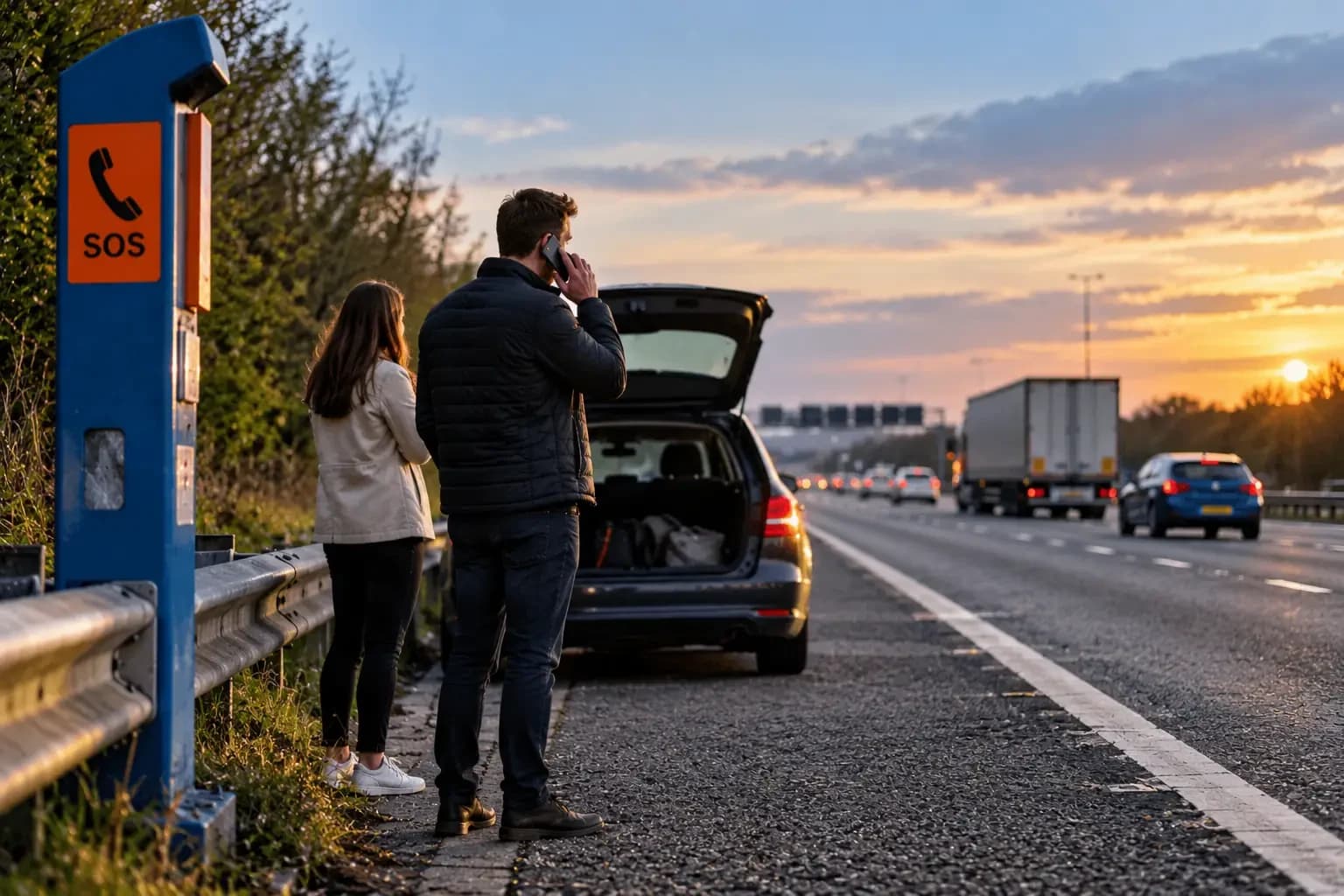
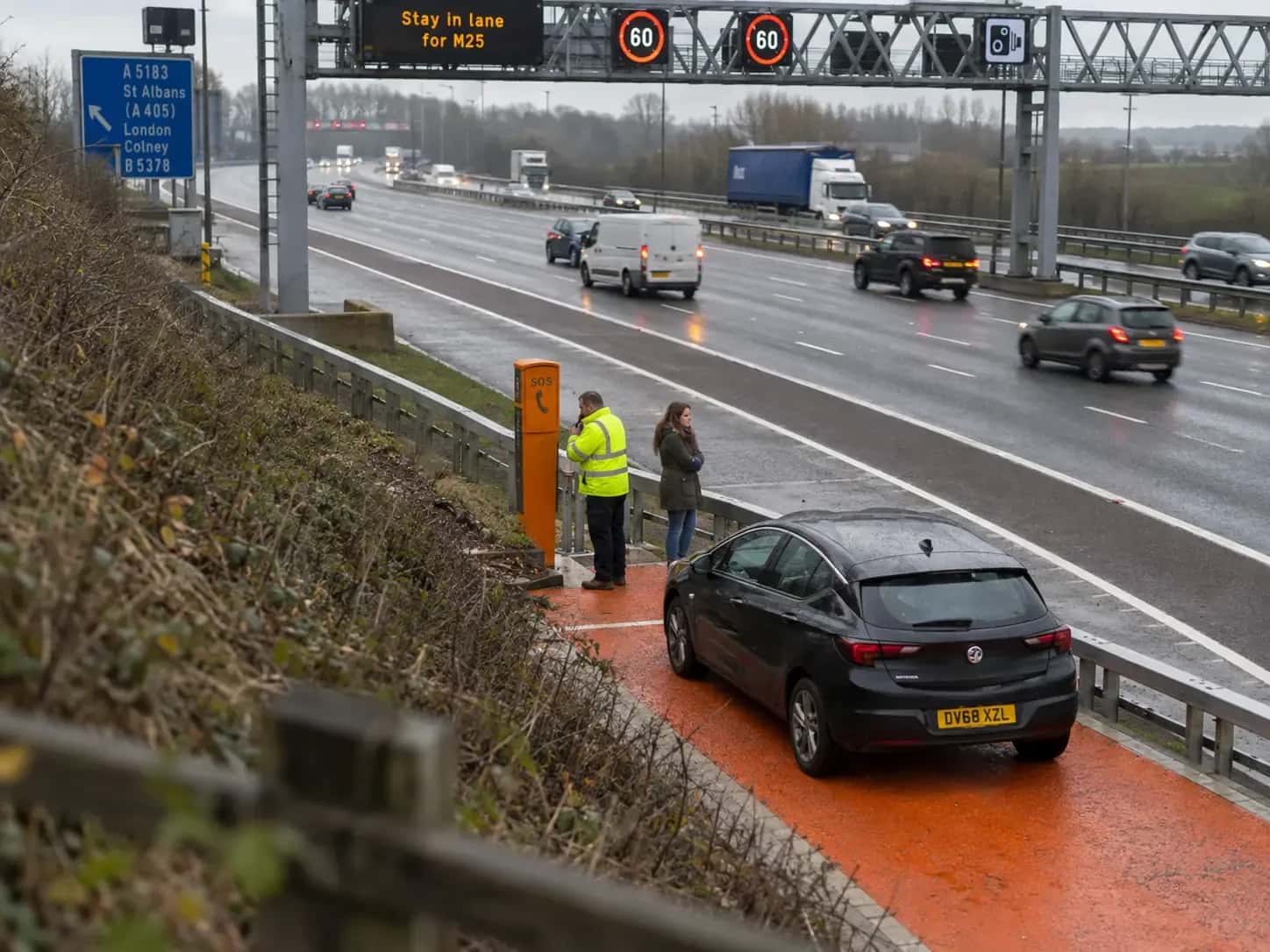
A motorway breakdown puts you beside fast-moving traffic with little warning. Your phone signal may drop, and every minute on the carriageway raises the risk.
This guide shows what to do if your car breaks down on a motorway in the UK. You get clear steps for hard shoulders, smart motorways and live lanes, plus who to call.
What to do if your car breaks down on a motorway in the UK: the 6 steps
Leave the motorway if you can, and if you cannot, go left, get behind the barrier and call for help.
- 1Leave at the next exit, or pull into a service area, if your car still moves.
- 2If you cannot leave, indicate left and stop in an emergency area or on the hard shoulder, as far left as possible, with your wheels turned left.
- 3Switch on your hazard lights, plus your sidelights in the dark or in poor visibility.
- 4Get out through the doors away from traffic, take your passengers with you and wait behind the safety barrier.
- 5Call National Highways on 0300 123 5000, or use the emergency telephone, then call your recovery company.
- 6If you cannot reach a safe place or cannot get out, stay in the car with your seat belt and hazard lights on, and call 999.
Step 1: Leave the motorway if you can
Leaving the motorway is the safest choice, so head for the next exit or a service area while your car still drives.
The Highway Code (rules 275 to 278) names a service area as the safest place to stop on a motorway. Lay-bys, emergency areas and hard shoulders also count, but the hard shoulder gives less protection because it sits so close to fast traffic.
Act on the first warning. National Highways tells drivers to leave at the next exit or enter a service area when a red or amber warning light appears.
Step 2: Go left to an emergency area or the hard shoulder
If you cannot leave the motorway, go left: indicate, move into the left-hand lane and stop in an emergency area, lay-by or on the hard shoulder.
Stop as far left as you can, leave room to open the doors and turn your wheels to the left. Try to stop just past an emergency telephone. Switch on your hazard lights, plus sidelights in the dark or poor visibility.
| Where you stop | What to do |
|---|---|
| Service area or exit | Leave the motorway. The Highway Code calls a service area the safest place to stop. |
| Hard shoulder | Stop as far left as you can, wheels turned left, ideally by an emergency telephone. Leave by the left-hand doors and wait behind the barrier. |
| Emergency area | Stop inside it, switch on your hazards and call National Highways. Do not leave without speaking to them. |
| Live lane, or you cannot get out | Keep your seat belt and hazard lights on, and call 999. |
Choose an emergency area over the hard shoulder when you can. National Highways states that about one in 20 motorway deaths happen on the hard shoulder, and its latest data shows no deaths in emergency areas.
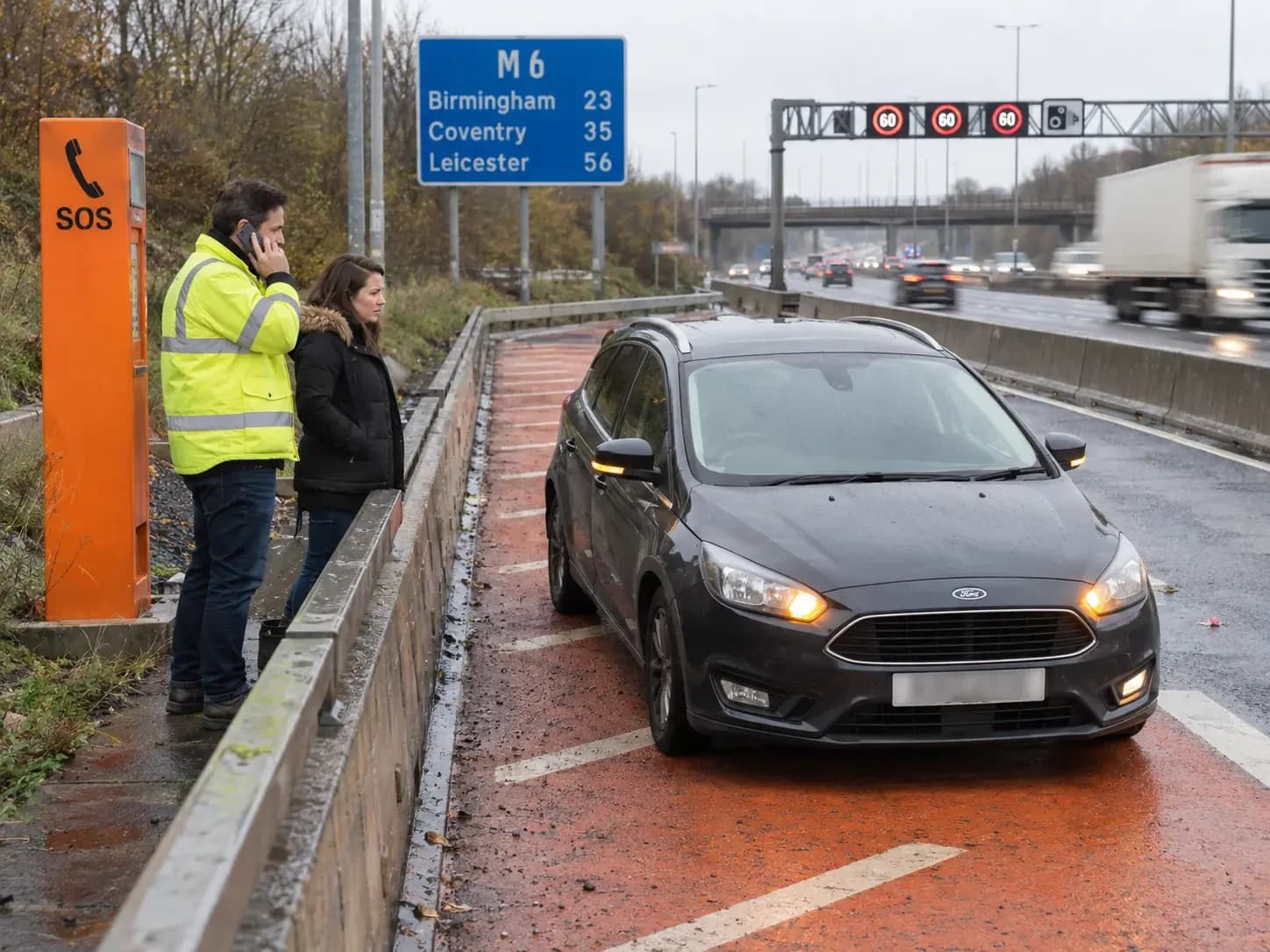
Emergency areas sit away from live lanes, have orange surfacing and include an emergency telephone linked to a regional control room. Blue signs with an orange SOS telephone symbol mark them.
What if your car breaks down on a smart motorway with no hard shoulder?
On a smart motorway with no hard shoulder, aim for an emergency area or the next exit, because the left-hand lane carries live traffic.
Move into the left-hand lane, switch on your hazard lights and follow the orange SOS signs to the next emergency area. If you cannot reach one, stop as far left as you can, towards the verge or slip road.
If you stop in a live lane or cannot get out safely, stay in the car with your seat belt and hazard lights on, and call 999. Ask for the police, or press your SOS button if your car has one.
A red X above a lane means National Highways has closed it, so never drive in it. After your call, the control room can set signs and close the lane around you.
Radar stopped vehicle detection helps control rooms spot a stranded car on smart motorways. The regulator ORR said in March 2026 that this technology continues to meet national performance requirements, after its December 2022 report found it falling short.
Treat the technology as a backup, not a plan. Your best protection is still to get out of the live lane and call for help.
Step 3: Where should you stand once you are out?
Stand behind the safety barrier, well away from your car and the carriageway, and never between your car and oncoming traffic.
Leave by the doors away from traffic and take your passengers with you. Wear hi-vis clothing if you have it within easy reach, and watch for hazards such as drops or debris behind the barrier.
Keep children under control and away from the carriageway. Keep dogs and other pets in the car, unless an emergency forces you to take them out, and then hold them on the verge.
Do not go back to the car, even in rain, cold or the dark.
Most drivers get this wrong. An RAC survey of 1,900 drivers in October 2023 found that 78% would put themselves at risk after stopping on a hard shoulder, and only 22% would stand correctly.
In a separate poll of 189 patrols in October 2023, RAC found that 78% of drivers were still inside their cars when patrols arrived. RAC advises packing warm layers, waterproofs and sturdy footwear, so you can wait outside in cold weather.
If a disability stops you getting out, stay in the car with your seat belt and hazard lights on, and call 999. Tell the operator about your needs. Deaf, hard of hearing or speech-impaired drivers can register for the 999 text service before they travel.
Who should you call first, and what number do you use?
Call National Highways on 0300 123 5000, or use the emergency telephone, then call your recovery company.
Use the free emergency telephone if one is close. It connects you directly to a National Highways control centre and identifies your location. Face the traffic while you speak, and tell the operator if you are alone, older or disabled.
Unsure whether to walk to the telephone or use your mobile? Use the telephone if it is close and you can reach it behind the barrier. Otherwise, use your mobile and read out the number on the nearest marker post or driver location sign.
| Where you are | Who to call |
|---|---|
| England: hard shoulder or emergency area | The emergency telephone, or National Highways on 0300 123 5000. Then call your recovery company. |
| Scotland | The emergency roadside telephone, which connects you directly to Traffic Scotland. For urgent reports, call Police Scotland on 999. |
| Wales | The emergency telephone, or 999 if you are in danger. |
| Live lane, or you cannot get out | 999. Ask for the police, or press your SOS button. |
| Motorway roadworks | 999. Press your SOS button if your car has one. |
Northern Ireland publishes its own Highway Code, so check its rules before you drive there.
Save 0300 123 5000 and your recovery company's number in your phone before you set off. National Highways advises drivers to store both numbers in advance.
What happens when your recovery truck arrives?
Your recovery truck can only help once the scene is safe, because National Highways says recovery operators should never have to work in a live lane.
If you stop in a live lane, expect National Highways to make the scene safe first. It sets signs and signals, sends traffic officers or calls the police to protect recovery crews before anyone works near your car.
Recovery from an emergency area follows the same rule. National Highways encourages operators to contact its control room before they pull back onto the carriageway, and you must not leave the area without speaking to National Highways.
When you reach a safe spot, give the operator the details that decide which truck to send.
- The road name, your direction of travel and the nearest junction
- The marker post or emergency area number, if you can see it
- Your vehicle's make, model, registration, size and approximate weight
- What the fault is, and whether the car starts, rolls, steers and brakes
- How many passengers you have, and where you want the car to go
AHS Recovery asks for exactly these details when you call. The team provides motorway breakdown recovery for cars, small and medium vans, 4x4s, SUVs and non-running vehicles, and it recovers electric and automatic cars.
Large, modified or heavily loaded vehicles may need an extra assessment. If your car needs towing from the safe spot, AHS Recovery tows it to your chosen destination.
You choose that destination: an agreed garage, your home or a storage facility. For longer journeys, AHS Recovery also offers nationwide vehicle transportation and delivery.
What not to do on a motorway
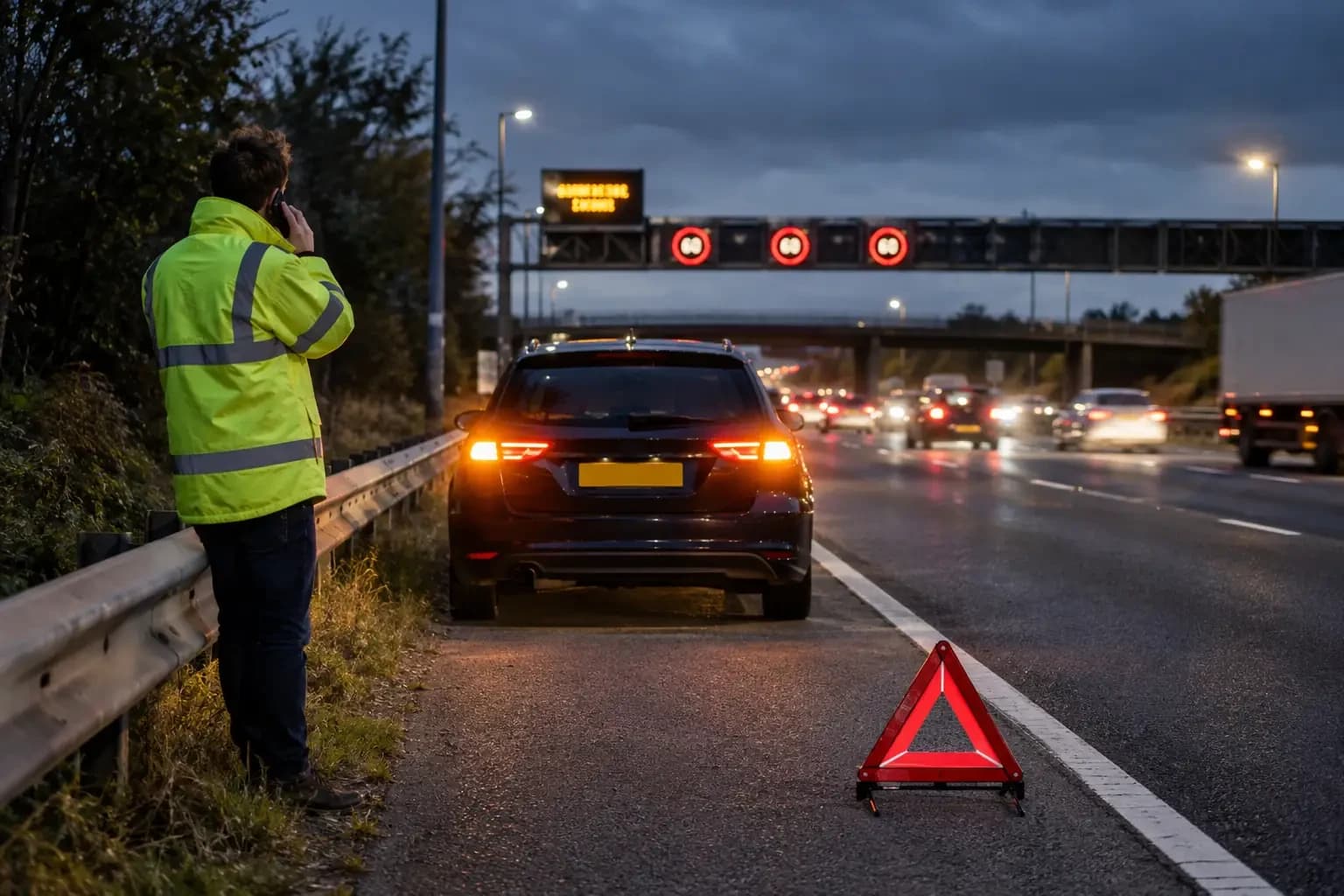
Do not repair your car, put out a warning triangle or stand between your car and the traffic.
- Do not attempt repairs, not even a wheel change.
- Do not place a warning triangle on the carriageway.
- Do not go back to your car, even in bad weather.
- Do not stop to help another broken-down vehicle. Call National Highways or 999 instead.
- Do not leave an emergency area without speaking to National Highways.
- Do not stop on the hard shoulder to rest, make a call or swap drivers.
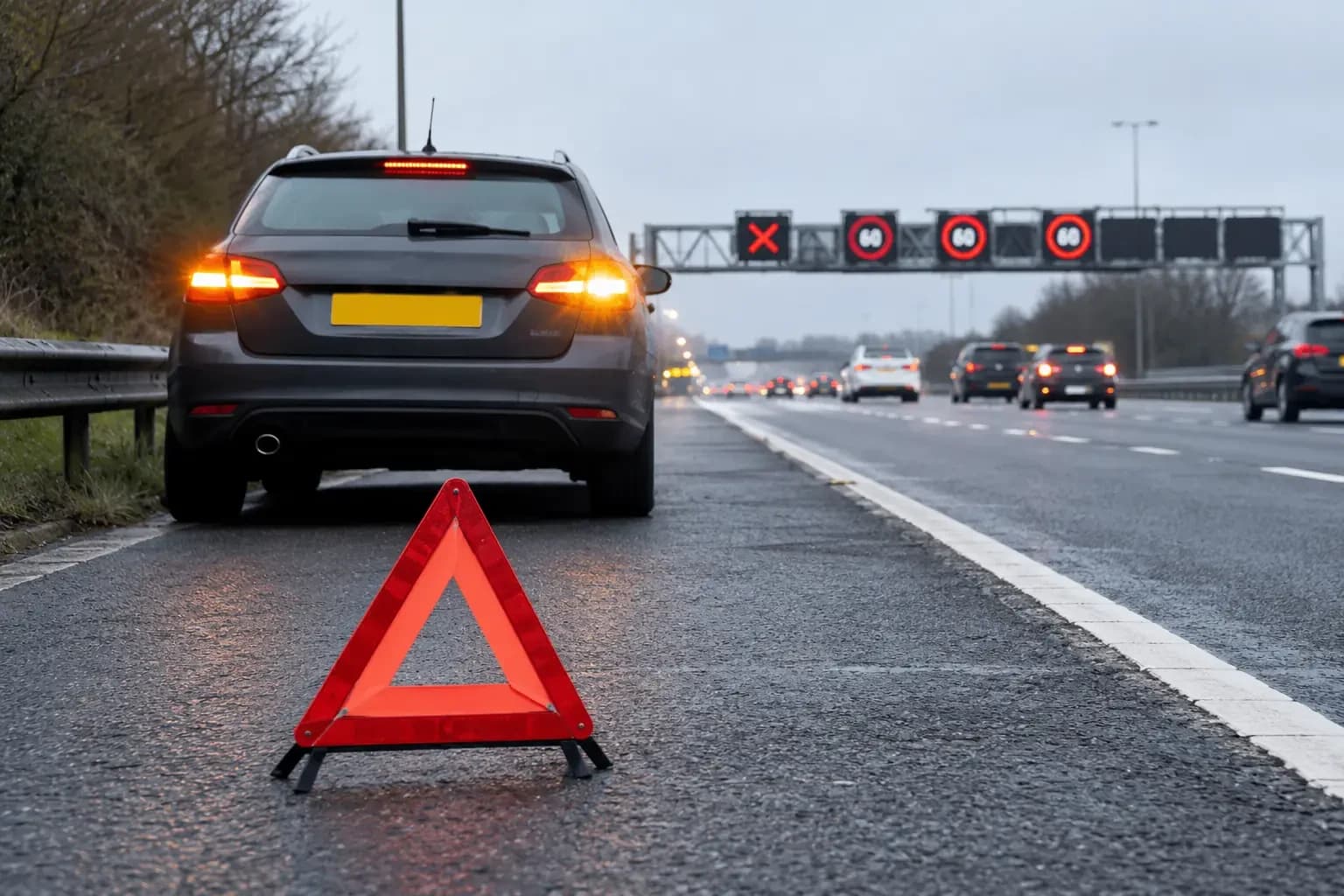
Official guidance advises against placing a warning triangle on the carriageway — leave the vehicle and wait behind the barrier instead.
What if you break down in motorway roadworks?
Call 999 if you break down in motorway roadworks, and press your SOS button if your car has one.
National Highways monitors traffic in roadworks closely, but it still tells drivers who break down there to call 999 and ask for the police.
Some roadworks show free recovery signs. A crew then moves you to a safe place at no charge, but that move only takes you out of danger, so you still need a recovery company to take the car on.
If a collision caused your breakdown, call 999 if anyone is hurt and wait for the emergency services. Then arrange accident recovery when the scene is clear.
How do you rejoin the motorway safely?
To rejoin the motorway from a hard shoulder, build up speed, signal and wait for a safe gap.
Watch for other stopped vehicles, obstructions and debris ahead of you.
From an emergency area, use the emergency telephone and follow the operator's instructions. National Highways may need to close a lane so you can rejoin safely.
What should you keep in the car?
Keep a few simple items in the car so a wait on the verge stays safe and comfortable.
| Item | Why it helps |
|---|---|
| Hi-vis jacket | You can wear it while you wait, so reach for it before you step out. |
| Warm layers, waterproofs, sturdy footwear | RAC advises these for a wait in cold or wet weather. |
| Charged phone with numbers saved | It lets you call National Highways and your recovery company. |
| Torch | It helps you see in the dark while you wait. |
Check your tyres, fuel and battery before a long trip. Insurer Ageas lists tyre blowouts, lack of fuel and battery faults among the common causes of motorway breakdowns.
AHS Recovery offers roadside assistance and jump starts for 12V and 24V vehicles if a problem starts before you reach the motorway.